

Best Tactical Gear for Everyday Carry: 2026 Picks
Table of Contents
- Why Your Everyday Carry Needs a Tactical Edge
- The Core Loadout: Essential Tactical Gear Categories
- Best Tactical Pocket Tools for Daily Utility
- High-Output Illumination and Rugged Timekeeping
- Scenario-Based Loadouts: Building a Kit That Fits Your Life
- Tactical Gear Maintenance Guide: Extending the Life of Your Tools
- Balancing Budget, Weight, and Legal Compliance
- Final Verdict: Build Your Loadout with Intention
- Frequently Asked Questions
Last Updated: September 9, 2026
Why Your Everyday Carry Needs a Tactical Edge
Most people treat their daily carry as an afterthought: phone, keys, wallet, done. But the difference between a prepared civilian and someone caught flat-footed often comes down to a few ounces of well-chosen gear. The best tactical gear for everyday carry isn't about looking like you stepped off a range day; it's about having tools that answer real problems before they become emergencies.
The market is flooded with "tactical" items that prioritize aesthetics over utility. A genuine loadout is built on durability, ergonomics, and the ability to perform under stress.
The Core Loadout: Essential Tactical Gear Categories
Building a tactical gear setup requires a foundation of core categories that address fundamental needs: cutting, illumination, timekeeping, and organization.
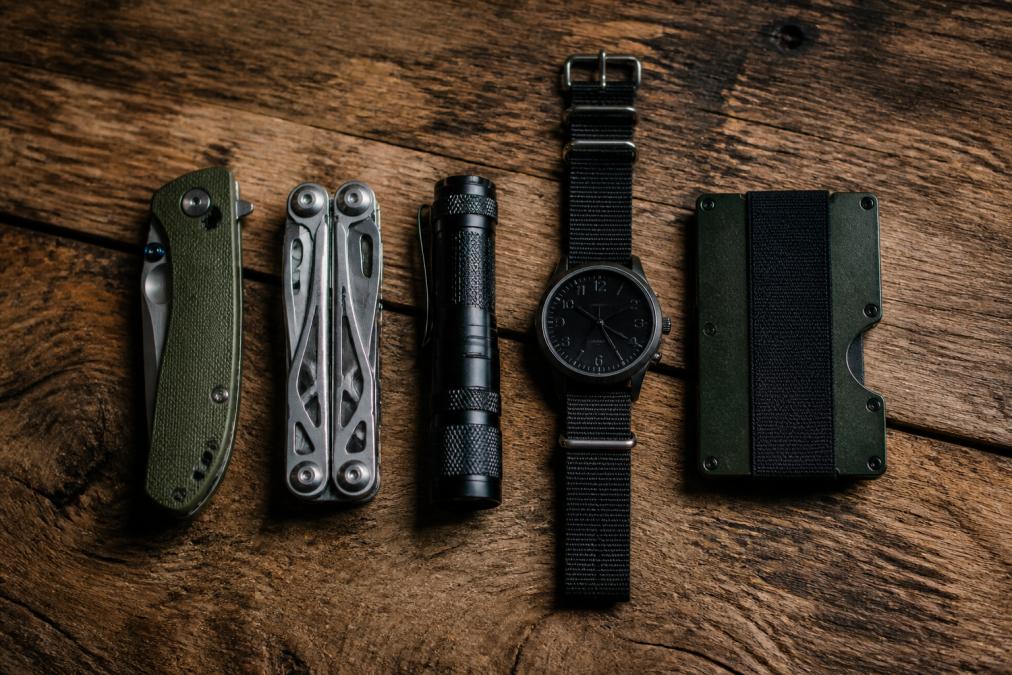
Your core system typically includes a pocket knife or multi-tool, a high-output light source, a reliable watch, and a method to carry identification and cash securely.
Best Tactical Pocket Tools for Daily Utility
Pocket tools are the most frequently used items in any loadout, so choosing the right one is crucial.
The Versatile Multi-Tool Standard
Leatherman Wave+ is the benchmark for full-sized multi-tools. It features 18 essential tools, including pliers, saws, screwdrivers, and one-hand operable blades (leatherman.com). The replaceable wire cutters and all-locking features make it a safe and reliable choice for field repairs and emergency preparedness. Pricing is a one-time purchase of $119.95.
- Pros: Extremely versatile toolset; industry-leading warranty.
- Cons: Heavier than single-purpose tools; may be overkill for light urban use.
The Lightweight Knife Option
For those who prioritize minimal weight, the Benchmade Bugout is a top contender. It uses CPM-S30V premium stainless steel for excellent edge retention and an ultra-lightweight Grivory handle (benchmade.com). The AXIS locking mechanism ensures secure operation, and the reversible deep-carry pocket clip allows for discreet carry. It is priced at $153.00.
- Pros: Extremely lightweight; superior blade steel retention.
- Cons: Higher price point compared to entry-level knives.
For a minimalist aesthetic with integrated tools, The James Brand The Ellis V2 offers a slim profile with a Sandvik 12C27 steel blade, a bottle opener, and a flathead screwdriver. At $129.00, it is a premium choice for urban carry where discretion is key.
High-Output Illumination and Rugged Timekeeping
A flashlight and a watch are non-negotiable elements of a serious tactical gear setup.
The Wuben X4 Compact flashlight delivers a high-lumen output in a pocket-friendly chassis. It features multiple lighting modes and a rechargeable battery system, making it a practical choice for daily carry. Priced at $89.99, this is a compact tool that performs well above its size class.
- Pros: High power-to-size ratio; durable build quality.
- Cons: Requires proprietary charging cable.
For timekeeping, the G-SHOCK DW-5600 remains a legend in rugged durability. It offers 200-meter water resistance, a shock-resistant structure, and a multi-function alarm and stopwatch (casio.com). At $75.00, it provides virtually indestructible reliability with a long battery life, making it a staple for hard-use scenarios.
| Tool | Starting Price | Best For | Standout Feature | Key Limitation |
|---|---|---|---|---|
| Leatherman Wave+ | $119.95 | Field repairs & emergencies | 18 tools, all-locking | Heavier than single tools |
| Benchmade Bugout | $153.00 | Lightweight daily cutting | CPM-S30V steel, 1.85 oz weight | Premium price point |
| Wuben X4 Flashlight | $89.99 | High-intensity illumination | High-lumen output, compact | Proprietary charging cable |
| G-SHOCK DW-5600 | $75.00 | Rugged, reliable timekeeping | 200m water resistance | Basic feature set |
Scenario-Based Loadouts: Building a Kit That Fits Your Life
The 'one-size-fits-all' approach to tactical gear fails because your environment dictates your needs. This section provides three scenario-specific loadouts.
Loadout 1: The Urban Commuter
Mission Profile: Navigating a city for 10-12 hours, including public transit, office environments, and potentially unsafe parking garages or streets. Primary needs are discreet utility, personal security, and handling minor emergencies without drawing attention.
Core Gear and Rationale:
- Cutting Tool: A slim, non-threatening folder like the Benchmade Bugout or a Kershaw Leek. The blade should be under 3 inches to stay within most city ordinances. The goal is to open packages and cut cord, not to be a weapon.
- Illumination: A compact, low-profile light like the Streamlight Microstream USB. It is small enough to clip inside a pocket and provides sufficient light for navigating a dark stairwell or finding a dropped key.
- Medical: A minimalist kit, not a full IFAK. A few bandages, antiseptic wipes, and a single trauma dressing in a flat pouch that fits in a bag or a large pocket. The goal is to handle minor cuts and scrapes, not to treat a gunshot wound.
- Carry Method: A slim sling bag or a well-organized backpack. The bag should have a dedicated 'quick-access' pocket for your phone and transit card. A bag with a hidden back panel pocket is ideal for a wallet or passport.
- Self-Defense (Optional): A small OC spray canister (2.5 oz or less) that is legal in your jurisdiction. It should be carried in a pocket or a holster on your non-dominant side for easy access.
Trade-offs: The primary trade-off is utility versus discretion. A full multi-tool is more capable but adds bulk and weight. Carry a small multi-tool like the Leatherman Squirt PS4 on your keychain for occasional use, while relying on a dedicated knife for frequent cutting tasks.
Loadout 2: The Office Professional
Mission Profile: A desk-bound environment with occasional travel to meetings or client sites. Primary needs are professional appearance, minimal pocket bulk, and tools that do not raise questions.
Core Gear and Rationale:
- Cutting Tool: A premium, minimalist knife that looks more like a writing instrument than a weapon. The James Brand The Ellis V2 or a Böker Plus Tech Tool City 1 are excellent choices. They are slim, use high-quality steel, and have a refined aesthetic.
- Illumination: A pen light or a light that clips into a pocket like a pen. The Lumintop IYP365 is a good example. It is unobtrusive and provides enough light for reading a menu or finding a dropped item under a desk.
- Writing Instrument: A high-quality pen like the Tactile Turn Bolt Action Pen. It is a tool you will use daily and serves as a professional accessory.
- Organization: A slim cardholder wallet like the Ekster Aluminum Cardholder. It holds a few cards and cash, has RFID protection, and fits easily in a front pocket.
- Medical: A few adhesive bandages and a single alcohol wipe in a small, flat pouch. This is for minor office accidents, not for field trauma.
Trade-offs: The main trade-off is capability for aesthetics. Keep a separate, more capable kit in your car or briefcase for when you leave the office environment.
Loadout 3: The Wilderness Weekend
Mission Profile: A 24-48 hour trip into a state or national park for hiking, camping, or fishing. Primary needs are self-sufficiency, durability, and handling emergencies far from help.
Core Gear and Rationale:
- Cutting Tool: A full-sized multi-tool like the Leatherman Wave+ or a dedicated fixed-blade knife. The multi-tool is for gear repair and camp chores, while a fixed blade like the ESEE 3 or Morakniv Companion is for heavier tasks like batoning wood or preparing food.
- Illumination: A high-lumen, rechargeable light like the Wuben X4 or a headlamp like the Black Diamond Spot 400. A headlamp is critical for hands-free tasks around camp.
- Medical: A dedicated IFAK pouch with trauma supplies, including a tourniquet, hemostatic gauze, and a chest seal. This is in addition to a basic first-aid kit for blisters and minor cuts.
- Navigation and Communication: A physical map and compass, plus a fully charged power bank for your phone. Cell service is often unreliable, so a paper backup is non-negotiable.
- Fire and Repair: A ferrocerium rod and a small repair kit with para-cord, zip ties, and duct tape.
Trade-offs: The primary trade-off is weight and bulk for capability. This loadout is not for daily pocket carry; it is designed to be worn on a belt or carried in a daypack. Prioritize life-safety items first, comfort items second.
Tactical Gear Maintenance Guide: Extending the Life of Your Tools
Purchasing quality gear is only half the battle; maintaining it ensures it performs when needed. Dirt, moisture, and neglect are the enemies of hard-use equipment.
- Knives and Blades: Clean the blade with a solvent to remove residue, then apply a light coat of oil to prevent corrosion. Check the pivot screw for tightness and lubricate the mechanism to ensure smooth deployment. For blade steel like D2 or CPM-S30V, a ceramic rod or fine diamond stone is ideal for touching up the edge.
- Multi-Tools: Open all tools and wipe down the joints. Use compressed air to remove grit from the plier head and hinges. Apply a small amount of lubricant to the pivot points and work the tools to distribute it evenly.
- Electronics: For flashlights, inspect the O-rings for cracks and apply a silicone grease to maintain the water resistance seal. Clean the battery contacts with a dry cloth to prevent corrosion and ensure a solid connection.
Balancing Budget, Weight, and Legal Compliance
Balancing the three constraints of budget, weight, and legal compliance is where most loadouts fail.
Legal and Compliance Considerations: A State-by-State Reality
The legal status of your gear is not a footnote; it is a primary design constraint. Knife laws vary significantly across jurisdictions. Some states restrict blade length to three inches in public spaces, while others have no length restriction for folding knives. Automatic or assisted-opening knives are heavily regulated in some states and legal in others. Pepper spray is legal in all 50 states, but restrictions on canister size and OC concentration vary.
To navigate this, build a loadout around tools that are widely legal. A standard folding knife with a blade under three inches and a manual opening mechanism is legal in the vast majority of jurisdictions. For self-defense, a small OC spray canister is a more universally legal option than a tactical pen or a fixed-blade knife.
The Weight Budget: Ergonomics and All-Day Carry
Beyond legality, the physical burden of your gear is critical. A loadout that feels fine for an hour can cause back strain, hip pain, or uncomfortable 'printing' by the end of a workday. Think in terms of a 'weight budget' and a 'carry strategy.'
Experienced carriers distribute weight across multiple points rather than concentrating it on one. A dedicated EDC belt with a reinforced nylon or polymer core prevents your pants from sagging and keeps your gear from shifting. A well-designed sling pack that sits high on the back and can be rotated to the front for access reduces strain compared to a single-strap messenger bag.
Budget vs. Premium: A Framework for Decision-Making
The budget-versus-premium debate is about where to spend your money for the most significant impact. Allocate your budget based on the frequency and criticality of use. Your most-used tool, such as a pocket knife, warrants a higher investment in blade steel and lock mechanism. A tool you hope never to use, like a trauma kit, should still be reliable, but you do not need the most expensive version of every item.
For example, the Opinel No. 8 at $17.00 offers a sliceable blade but lacks a pocket clip and a robust locking mechanism. For daily carry, a mid-range knife like the Ontario Rat II, typically around $40, offers a more durable build and a reliable liner lock. Similarly, a budget light like the Streamlight Microstream at around $30 is solid, but a premium light like the SureFire EDC1-DFT at $185 offers significantly higher output and a more durable body, which may be justified for professional use.
Avoid the trap of buying cheap versions of critical tools that will fail when you need them most. Invest in a few high-quality core items and fill in the gaps with budget-friendly options for less critical roles.
Final Verdict: Build Your Loadout with Intention
The best tactical gear for everyday carry is not about owning the most expensive items; it is about owning the right items for your life. Start with a high-quality pocket knife and a dependable light source, then build out from there based on your specific needs.
At Ironclad Supply, we apply the same philosophy of discipline and quality to our apparel. We believe that quality is never an accident, and every detail is refined before it carries the Ironclad name. Our gear is designed for people who prepare today to be ready tomorrow, using durable materials that protect what matters most.
Frequently Asked Questions
What are the most essential tactical gear items for everyday carry?
The core of any tactical loadout starts with a reliable cutting tool, a source of light, and a way to carry it all. A quality multi-tool like the Leatherman Wave+ handles repairs, while a dedicated knife, such as the Benchmade Bugout, covers heavier cutting tasks. Pair these with a high-lumen flashlight like the Wuben X4. This foundation gives you utility and preparedness for most daily situations without weighing you down.
How do I build an EDC kit without spending a fortune?
Start with a budget and stick to the essentials. You can build a functional kit for around $100 by choosing tools like the Opinel No. 8 for cutting and a basic but reliable flashlight. Focus on the gear you will actually use each week. As your needs become clearer, you can upgrade individual pieces, like moving to a premium multi-tool, rather than buying everything at once.
What is the best way to maintain my tactical gear?
A simple routine keeps your gear mission-ready. After use, wipe down blades and metal tools with a lightly oiled cloth to prevent corrosion. Keep moving parts, like knife pivots and multi-tool pliers, clean and lubricated. For electronics like flashlights, check the charging port and seals regularly. A few minutes of care each month prevents failures when you need your equipment most.
Are karambit-style knives legal for everyday carry?
Knife laws vary significantly by state and even by city. While a tactical karambit like the CRKT Provoke X offers rapid deployment, it is also subject to more restrictions in some areas. Before carrying any knife, especially one with a curved blade or specific opening mechanism, check your local statutes. Understanding the law is part of being a prepared civilian.
How do I choose between a multi-tool and a dedicated pocket knife?
This decision comes down to your daily tasks. A multi-tool, such as the Leatherman Wave+, offers unmatched versatility with pliers, screwdrivers, and saws, making it ideal for field repairs and unexpected problems. A dedicated knife like the Benchmade Bugout provides a better cutting geometry and a lighter profile for frequent use. Many prepared individuals carry both to cover all bases.
Building a loadout is a personal journey. It requires honest assessment of your daily risks and the discipline to carry only what serves a purpose. Start small, choose gear that meets a genuine need, and maintain it with the same rigor you apply to your training. Then, when the unexpected happens, you won't be reacting; you will be acting with the tools you already trust. Get started with Ironclad Supply and build a foundation of readiness that reflects your purpose.